
The central bank measures though are also taking a toll on the banking sector, which is heavily reliant on short-term money markets for capital.

'In the overall global portfolio, India's weighting has come down in the past seven months.'

Rebalance your portfolio in case it has become overweight on equities vis-a-vis your strategic asset allocation.

The surge in IT, auto and FMCG stocks were led by investors seeking safety against market volatility.

India's equity markets are on a roller-coaster ride, after delivering spectacular returns for two consecutive years - in 2020 and 2021. The benchmark National Stock Exchange's (NSE's) Nifty50 is down 1.5 per cent in the first nine months of the current calendar year 2022 (CY22) as foreign portfolio investors sold Indian stocks due to rising bond yields in the US and across global markets, including India. The sell-off in the Indian equity markets has, however, not been broad-based and largely limited to sectors facing earnings headwinds from rising interest rates, lower commodity and energy prices, and likely economic recession in advanced economies.

'The market will focus on the fact that India does have strong earnings growth this year.'

Optimism about a stable govt at the Centre, a demand revival and falling oil prices buoyed the markets.

Mid-cap information technology (IT) stocks dominate the list of companies that are trading significantly above their 200-DMA

'Every type of deal that US government officials were privately indicating 'hope' to have included a few months back made it in.'

Rupee ends day at 61.91 against the US dollar.

Mid- and small-cap indices have outperformed the frontline benchmarks - the S&P BSE Sensex (up around 10 per cent) and the Nifty50 (13 per cent) - in the first half of calendar year 2021 (H1-CY21) by rallying 26 per cent and 39 per cent, respectively. The trend, analysts believe, is likely to continue in H2-CY21 as well. The outperformance in H1-CY21 comes on the back of improved earnings and strong inflows from the foreign portfolio investors (FPIs) in Indian equities. However, good monsoon so far, gradual opening up of the economy and the pick-up in the pace of vaccination provides support to the market.

Top losers include ONGC, SBI, PowerGrid, L&T, Yes Bank, Asian Paints, Bajaj Finance, Maruti and NTPC, falling up to 2.84 per cent. On the other hand, gainers include Tata Motors, TCS, HDFC, HCL Tech, Infosys, ITC, HDFC Bank and HUL, rising up to 2.18 per cent.

Govt rules out controls on FII capital as Sensex tanks 3.97%, rupee breaches 62 intra-day & gold surges the most in two years

Overall forex market sentiment suffered a sudden reversal of fortune contrary to expectation largely moving in line with local equities, reversing all early strong gains.

The 30-share Sensex stayed in the green for the better part of the session and hit the day's high of 38,297.70 as buying pace gathered momentum towards the fag-end.

'For the next two years, we expect the bulk of earnings growth contribution from sectors like financials and energy, where the outlook remains positive, while the sectors which are linked to domestic consumption and are currently witnessing strains on margins have low salience for Nifty earnings.'

Pharma major Sun Pharma remained the worst loser in the Sensex pack for the second day in a row after reports that regulator Sebi may reopen the insider trading case against the company.

Expectations of continued stimulus withdrawal by the US Federal Reserve added to the market's gloom.

SBI plunged over 3% after posting a 34.57% fall in net profit to Rs 2,538 crore for the quarter ended September 2016 on rise in provisions for non-performing loans.

'Money that came into mutual funds near the previous peaks -- the second half of 2017 and 2018 -- has in most cases experienced unflattering returns.' 'A large proportion of redemptions could be such inflows exiting when the market recovered sharply from July 2020 onwards.'

Skittish investors snapped up gold and other safe-haven assets amid fears of a global economic slowdown

'India is possibly the most fiscally constrained market in the region.'

'There will always be a challenge to maintain a fine balance to ensure that the growth keeps happening and inflation is contained.'


While analysts predicted the Sensex to cross 30,000 in 2016, the index currently stands 12% lower at 26,400.

'Stick to FDs of shorter tenures, preferably one-two years.'

Let's wait for the monetary policy on February 8 -- to see how it complements the fiscal commitments, points out Tamal Bandyopadhyay.

The weakness in the rupee and broader markets has led to evaporation in the market cap.

Most expect these bubbles to break in short order and cause serious financial pain to anyone who's foolhardy enough to remain invested in financial assets.
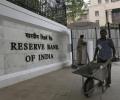
Economic Affairs Secretary Subhash Garg is the finance ministry's primary liaison with the RBI.

The FPI holding in India's top 100 companies, which are part of the Nifty 100 index, declined to 24.23 per cent on average at the end of March this year, from a high of 27.5 per cent at the end of March 2021. This is the lowest FPI holdings in India's top listed companies in at least three years. A general sell-off by FPIs has weighed on stock prices and the benchmark S&P BSE Sensex is down 8.5 per cent, from its 52-week high made in October 2021. Most analysts expect FPI flows to remain weak in FY23 as well, given rising bond yields in the US and an expected earnings slowdown in India due to high inflation and commodity prices.

Foreign portfolio investors were net buyers in equities to the tune of Rs 119 crore, as per provisional stock exchange data.

Stick to export-focussed plays, large-caps, say analysts

Saurabh Mukherjea, CEO, Ambit Capital, says he is advising clients to either take a genuinely long-term view on stocks or diversify the portfolio with stocks, bonds and gold for those with a short-term view.

After a sharp sell-off in the past two months, overseas investors were once again seen turning bullish on Indian equities. FIIs bought shares worth Rs 63.5 billion in the past five sessions, their highest weekly investment tally in many months.
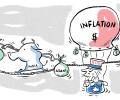
'The biggest risk to the Indian markets from a 12-18-month view is that the current government does not get re-elected, or loses in a way that is not represented at all in the next central government.'

'Companies with a strong business case and healthy balance-sheet should sail through and emerge more robust in the future.'

The country last raised the amount of government debt that foreign investors can buy by $5 billion in June last year.

The Sensex and the Nifty witnessed biggest one day loss in percentage terms since June 24

Rupee is seen to remain in the range of 67.50-68.80 in the short-term
